

Author name: Dr Shruti Khare Aterkar

PCOD/ PCOS

Why Are My Periods Irregular?

Why Are My Periods Irregular? Introduction Your period was due last week. Then it didn’t come. Or maybe it comes twice a month, or once every three months, and you never know what to expect. If this sounds familiar, you are far from alone. Many women in Ahmedabad search for PCOD / PCOS treatment after months of confusion and worry. Let’s go through why this happens and, more importantly, what you can do about it. What Counts as an Irregular Period? Every woman’s cycle is a little different. Still, doctors look for a general pattern. Your periods may be irregular if: Your cycle is shorter than 21 days or longer than 35 days You miss periods for three months or more The gap between periods keeps changing a lot Bleeding is very heavy, very light, or lasts longer than a week Teenagers often have irregular cycles for the first year or two after their first period. That is usually normal. Why Are My Periods Irregular? Your cycle is controlled by hormones. Think of it like an orchestra. When one instrument goes off beat, the whole rhythm changes. The most common reasons are: PCOD or PCOS Thyroid problems Stress or lack of sleep Sudden weight gain or weight loss Too much intense exercise High levels of a hormone called prolactin Recent pregnancy or breastfeeding Perimenopause (the years before menopause) Some medicines, including certain contraceptives Among young women, PCOD/PCOS is one of the leading causes. Is PCOD the Same as PCOS? In everyday conversation in India, people use both words for the same thing. The medical term is PCOS, or polycystic ovary syndrome. In simple words, the ovaries do not release eggs regularly, and the body makes more male-type hormones (androgens) than usual. Insulin, the hormone that handles sugar, often does not work well either. Studies suggest PCOS affects roughly 1 in 10 women, and Indian studies report somewhat higher numbers. What Are the Signs of PCOS Besides Irregular Periods? Periods are only one piece. Look out for: Acne that keeps coming back Extra hair on the face, chest, or belly Thinning hair on the scalp Weight gain, especially around the waist Dark, velvety patches on the neck or underarms Difficulty getting pregnant Not everyone has all of these. Some women have just one or two, which is why PCOS is often missed. Can Thyroid, Stress, or Weight Affect My Cycle? Yes, quite a lot. An underactive or overactive thyroid can make periods heavy, light, or irregular. Stress raises hormones that can delay ovulation. Very low body weight or crash dieting can stop periods completely. Extra weight can also disturb hormone balance. This is why a proper check-up matters. Two women with the same symptom can have completely different causes. Should I Be Worried About Missed Periods? A single late period after a stressful month is usually nothing to fear. But months of missed periods deserve attention. When you don’t ovulate, the lining of the uterus can keep building up without shedding. Over the long run, this can cause very heavy bleeding and, in some women, increase the risk of problems in the uterine lining. Untreated PCOS is also linked with a higher chance of diabetes, high blood pressure, and cholesterol problems. So, please don’t ignore it. But also don’t panic. All of this is preventable with timely care. How Is the Cause Found? Your doctor will start by listening to your story: your cycle pattern, weight changes, and family history. Then they may advise: A pregnancy test, to rule that out first Blood tests for thyroid, prolactin, and sex hormones Blood sugar and cholesterol checks An ultrasound of the pelvis to look at the ovaries and uterus PCOS is usually diagnosed when at least two of these three are present: irregular ovulation, signs of high male-type hormones, and polycystic-looking ovaries on ultrasound. What Does PCOD / PCOS Treatment in Ahmedabad Look Like? Treatment is personal. It depends on your symptoms and whether you want to get pregnant. Lifestyle changes: These are the foundation. Even a modest weight loss of 5 to 10 percent can help bring back regular ovulation in women who are overweight. Medicines for cycles: Hormonal tablets can regulate periods and protect the uterine lining. Insulin support: Some women benefit from medicines like metformin if insulin resistance is present. Acne and hair growth: Specific treatments can reduce these symptoms. Fertility care: If you are planning a baby, ovulation can be helped with medicines under medical guidance. Please avoid self-medicating with hormonal pills from a friend or chemist. The right choice depends on your tests. What Can I Do at Home? Small, steady habits make a real difference: Walk, cycle, or do yoga for at least 30 minutes most days Eat home-cooked meals with more vegetables, dal, and whole grains Cut down on sugary drinks and packaged snacks Avoid crash diets, which can make hormones worse Sleep 7 to 8 hours and find a way to unwind Keep a simple diary of your period dates. Your doctor will find it very useful When Should I See a Doctor? Book a visit if: You have missed three periods in a row Your cycles are shorter than 21 or longer than 35 days Bleeding is very heavy, such as soaking a pad every hour You have severe pain or bleeding between periods You have acne, hair growth, or weight gain along with irregular periods You have been trying to conceive for 6 to 12 months without success Final Thoughts Irregular periods can feel confusing and lonely. But they are your body’s way of asking for a closer look, and most causes are treatable. If you are looking for PCOD / PCOS treatment in Ahmedabad, consider meeting Dr. Shruti Khare Aterkar, an endocrinologist who can look at your hormones as a whole and build a plan that fits your life. You don’t have to figure this out alone. Book a consultation, get the right tests, and take the first step towards a
Thyroid

Is Hair Loss a Sign of a Thyroid Problem?

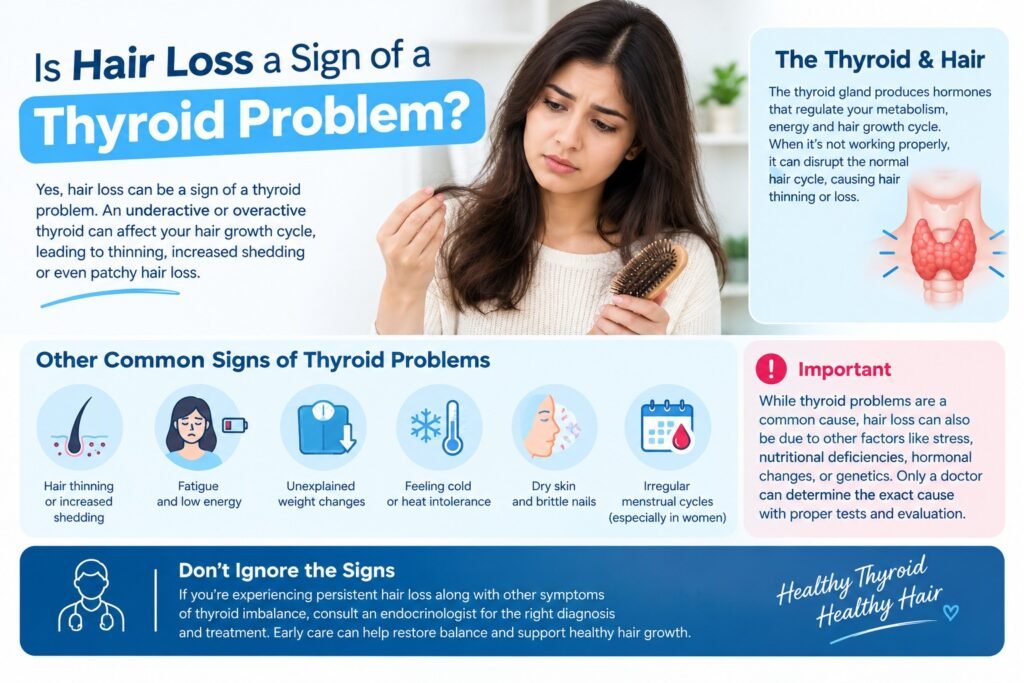
Is Hair Loss a Sign of a Thyroid Problem? Introduction You look at your hairbrush and there is more hair than there used to be. The shower drain looks worse too. It’s upsetting, and many people start worrying about everything from stress to serious illness. Sometimes the cause is your thyroid. If you are searching for thyroid disorders treatment in Ahmedabad, this guide will help you understand the link and what to do next. Take a breath. This is common, and it is very treatable. Is Hair Loss Really Linked to the Thyroid? Yes. The thyroid is a small, butterfly-shaped gland at the front of your neck. It makes hormones that control how fast your body uses energy. Your hair follicles depend on these hormones. When the levels go too high or too low, hair can weaken and fall out more than usual. How Does the Thyroid Affect Your Hair? Every strand of hair goes through a cycle. It grows for a few years, rests, and then sheds so a new one can take its place. Thyroid problems disturb this cycle. More hairs move into the resting and shedding phase at the same time. That is why you suddenly notice so much hair fall. This can happen with: Hypothyroidism: the thyroid is underactive and makes too little hormone Hyperthyroidism: the thyroid is overactive and makes too much What Does Thyroid Hair Loss Look Like? Thyroid-related hair loss has a typical pattern. It is usually: Spread evenly across the scalp, making hair look thinner overall Not in one bald patch Sometimes with dry, coarse, or brittle hair Sometimes with thinning of the outer edge of the eyebrows Losing 50 to 100 hairs a day is normal. If you are losing clearly more than that for several weeks, it is worth getting checked. What Other Symptoms Should I Look For? Hair loss rarely happens alone. Your body usually gives other hints. With an underactive thyroid: Constant tiredness Weight gain Feeling cold when others feel fine Dry skin and constipation Low mood or poor concentration Heavy or irregular periods With an overactive thyroid: Weight loss despite eating well Fast heartbeat Sweating and feeling hot Anxiety, shaky hands Loose stools Trouble sleeping Also look for a swelling at the front of your neck. Thyroid problems are more common in women, especially after pregnancy and around menopause. Could Something Else Be Causing My Hair Fall? Absolutely, and this is important. Hair loss has many causes, including: Low iron levels (very common in women) Low vitamin D or vitamin B12 Crash dieting or sudden weight loss Physical or emotional stress Delivery of a baby PCOS Family history of hair thinning Certain medicines That is why buying hair oils or supplements without knowing the cause often wastes time and money. Find the reason first. How Is a Thyroid Problem Diagnosed? The good news is that testing is quick and simple. Your doctor may suggest: TSH test: the main screening test for thyroid function Free T4 and T3: to see the actual hormone levels Anti-TPO antibodies: to check if your immune system is affecting the thyroid Your doctor may also check iron, vitamin D, and B12, since these often affect hair too. One practical tip: if you take biotin for hair, tell your doctor. It can sometimes interfere with thyroid blood tests and give misleading results. What Does Thyroid Disorders Treatment Involve? Treatment depends on what your tests show. The goal is simply to bring your hormone levels back to normal. Underactive thyroid: a daily thyroid hormone tablet, usually taken on an empty stomach in the morning. Iron and calcium tablets should be taken a few hours apart from it. Overactive thyroid: medicines to slow the thyroid down. In some cases, other options are advised by your doctor. Please do not stop or change your dose on your own, even when you feel better. Thyroid treatment often needs regular follow-up and blood tests to keep the dose right. An experienced endocrinologist can guide you through this step by step. Will My Hair Grow Back? In most people, yes. When thyroid levels settle, the hair cycle slowly returns to normal. But patience is needed. Hair grows slowly, so you may see improvement only after three to six months, sometimes longer. Shedding often reduces first, and new baby hairs appear later. If your hair is not improving, that does not mean treatment has failed. It may mean the dose needs adjusting, or another cause like low iron is also involved. What Can I Do at Home to Help? Small daily habits support your treatment: Eat enough protein, such as dal, paneer, eggs, or sprouts Include iron-rich foods like leafy greens, chana, and jaggery Avoid extreme diets Be gentle with your hair. Avoid tight hairstyles and very hot styling tools Sleep well and find ways to manage stress Take your medicines at the same time every day Final Thoughts Hair loss can shake your confidence, and it is natural to feel worried. But it is also a useful signal. It may be your body’s way of telling you the thyroid needs attention. The right diagnosis makes all the difference, and most thyroid problems are very manageable. If you are looking for thyroid disorders treatment in Ahmedabad, consider consulting Dr. Shruti Khare Aterkar, an endocrinologist who can find the real cause and plan treatment that suits you. Don’t wait for it to get worse. Book a consultation, get the right tests done, and take the first step towards healthier hair and better health.

Diabetes

Is Frequent Urination an Early Sign of Diabetes?

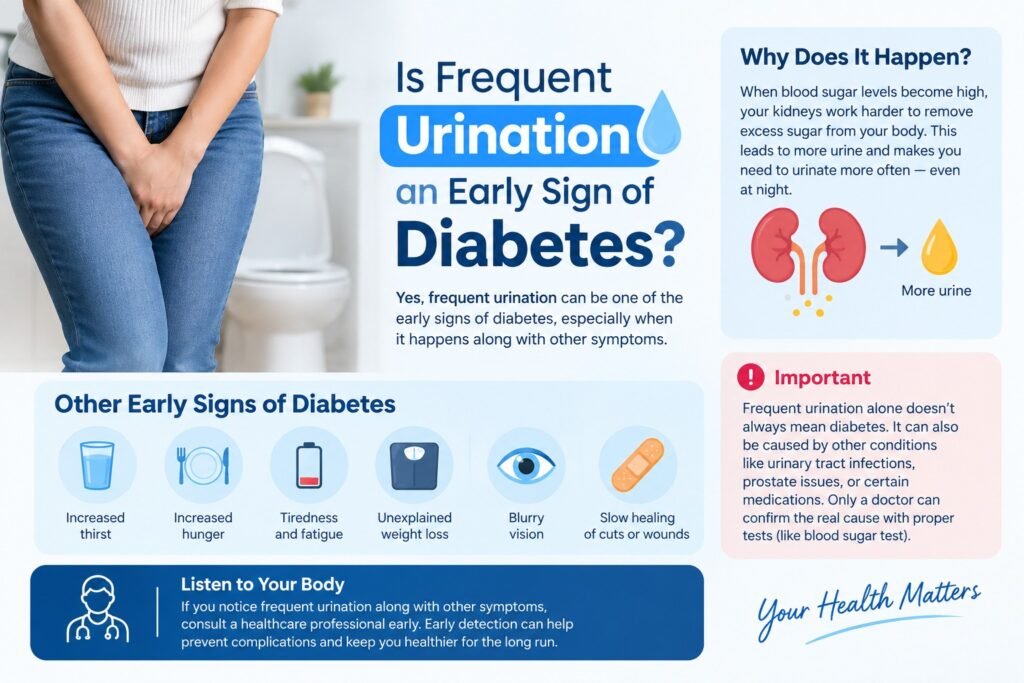
Is Frequent Urination an Early Sign of Diabetes? Introduction You wake up two or three times at night to use the washroom. During the day, you seem to be heading there every hour. It’s annoying, and a little worrying too. Many people in our city quietly wonder if this could be diabetes. If you have been searching for the endocrinologist in Ahmedabad to get answers, you are already taking a good first step. Let’s understand what your body may be telling you. Why Am I Peeing So Often? There are many reasons. You may be drinking more water or tea than usual. You may have a urine infection. Or it may be your blood sugar. Frequent urination is one of the most common early signs of diabetes. That is why it deserves attention, not panic. How Does Diabetes Cause Frequent Urination? Think of your kidneys as a filter. They clean your blood and decide what stays and what goes out. When blood sugar is too high, the kidneys cannot hold on to all of it. The extra sugar spills into your urine. Sugar pulls water along with it, so you end up passing more urine. This also explains the next symptom. You lose more fluid, so you feel thirsty. You drink more, and you pass more urine. It becomes a cycle. How Many Times a Day Is “Too Many”? Most adults pass urine about 4 to 7 times in 24 hours. Going 8 or more times, or waking up more than once at night, is worth noticing. Pay attention to the amount as well. If you are passing large volumes each time, that points more towards high blood sugar than a small bladder problem. What Other Early Signs of Diabetes Should I Watch For? Frequent urination rarely comes alone. Look for these companions: Constant thirst and a dry mouth Tiredness even after proper rest Blurred vision that comes and goes Weight loss without trying Increased hunger, even after meals Slow-healing cuts or wounds Tingling or numbness in hands and feet Repeated infections, such as skin or urinary infections Having one of these does not mean you have diabetes. But two or three together are a good reason to get tested. Can Something Other Than Diabetes Cause Frequent Urination? Yes, and it helps to know that. Other common causes include: Urinary tract infection (UTI) Too much tea, coffee, or cold drinks Water tablets (diuretics) prescribed for blood pressure or heart problems Overactive bladder Enlarged prostate in men Pregnancy Anxiety or stress This is why guessing at home does not work. Only a proper check can tell these causes apart. Who Is at Higher Risk of Diabetes? India has a large number of people living with diabetes, and many do not know it yet. You may be at higher risk if: Diabetes runs in your family You are overweight, especially around the belly You do little physical activity You are above 35 years of age You had diabetes during pregnancy You have PCOS (polycystic ovary syndrome) You have high blood pressure or high cholesterol If this sounds like you, regular screening is wise even without symptoms. When Should I See a Diabetologist? Book a visit if your frequent urination lasts more than a week or two, or if it comes with thirst, tiredness, or weight loss. Do not wait for it to get worse. Go sooner if you have burning while passing urine, fever, vomiting, or severe weakness. These need prompt attention. A diabetologist in Ahmedabad can look at the full picture, not just one symptom. That includes your diet, family history, and daily routine. How Is Diabetes Confirmed? The good news is that testing is simple. Your doctor may advise: Fasting blood sugar: 126 mg/dL or higher suggests diabetes HbA1c: 6.5% or higher suggests diabetes. It shows your average sugar over about three months Random blood sugar: 200 mg/dL or higher with symptoms Numbers between normal and diabetic are called prediabetes. Think of it as an early warning. With the right changes, many people can prevent it from turning into diabetes. What Can I Do Right Now? While you arrange a check-up, a few habits help: Drink water normally. Do not cut it down, as dehydration makes things worse. Cut back on sugary drinks, sweets, and refined foods. Walk for 30 minutes most days. Eat regular meals with vegetables, dal, and whole grains. Note down how often you urinate, and any other symptoms, to show your doctor. Small steps done consistently matter more than strict plans that fade in a week. Final Thoughts Frequent urination can be an early sign of diabetes, but it can also be a simple, treatable issue. What matters is not ignoring it. If it does turn out to be diabetes, please know this: it is very manageable, especially when found early. Millions of people live full, active lives with it. If you are worried, consider consulting Dr. Shruti Khare Aterkar, an experienced endocrinologist and diabetologist in Ahmedabad. A short conversation and a simple test can replace weeks of worry with clear answers. Book your appointment today and take the first step towards peace of mind.

Scroll to Top