
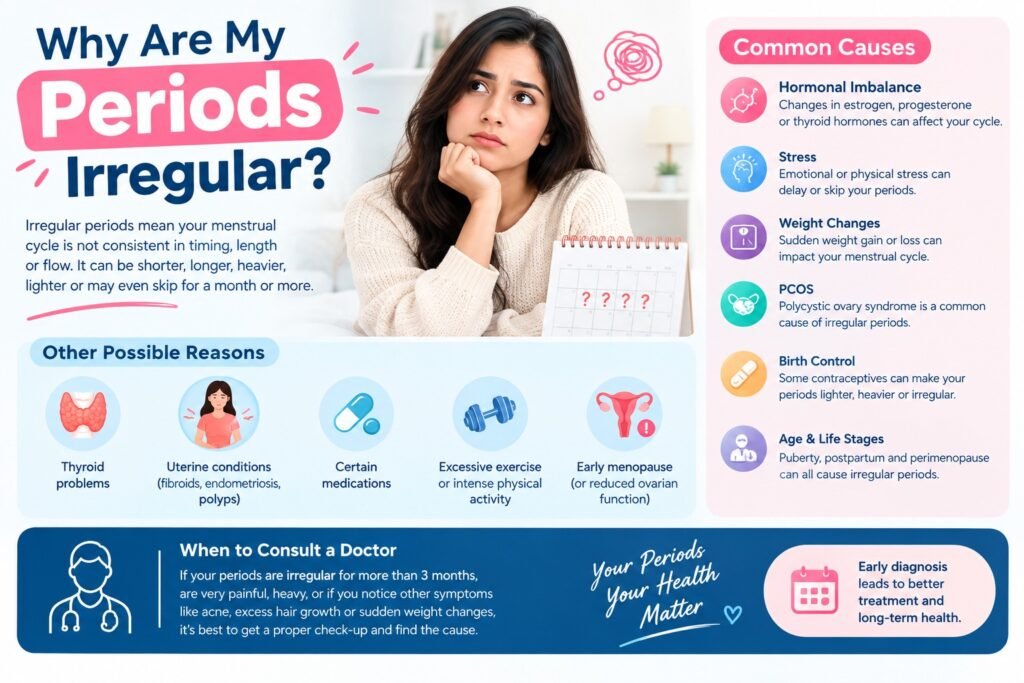
Why Are My Periods Irregular?
Why Are My Periods Irregular? Introduction Your period was due last week. Then it didn’t come. Or maybe it comes twice a month, or once every three months, and you never know what to expect. If this sounds familiar, you are far from alone. Many women in Ahmedabad search for PCOD / PCOS treatment after months of confusion and worry. Let’s go through why this happens and, more importantly, what you can do about it. What Counts as an Irregular Period? Every woman’s cycle is a little different. Still, doctors look for a general pattern. Your periods may be irregular if: Your cycle is shorter than 21 days or longer than 35 days You miss periods for three months or more The gap between periods keeps changing a lot Bleeding is very heavy, very light, or lasts longer than a week Teenagers often have irregular cycles for the first year or two after their first period. That is usually normal. Why Are My Periods Irregular? Your cycle is controlled by hormones. Think of it like an orchestra. When one instrument goes off beat, the whole rhythm changes. The most common reasons are: PCOD or PCOS Thyroid problems Stress or lack of sleep Sudden weight gain or weight loss Too much intense exercise High levels of a hormone called prolactin Recent pregnancy or breastfeeding Perimenopause (the years before menopause) Some medicines, including certain contraceptives Among young women, PCOD/PCOS is one of the leading causes. Is PCOD the Same as PCOS? In everyday conversation in India, people use both words for the same thing. The medical term is PCOS, or polycystic ovary syndrome. In simple words, the ovaries do not release eggs regularly, and the body makes more male-type hormones (androgens) than usual. Insulin, the hormone that handles sugar, often does not work well either. Studies suggest PCOS affects roughly 1 in 10 women, and Indian studies report somewhat higher numbers. What Are the Signs of PCOS Besides Irregular Periods? Periods are only one piece. Look out for: Acne that keeps coming back Extra hair on the face, chest, or belly Thinning hair on the scalp Weight gain, especially around the waist Dark, velvety patches on the neck or underarms Difficulty getting pregnant Not everyone has all of these. Some women have just one or two, which is why PCOS is often missed. Can Thyroid, Stress, or Weight Affect My Cycle? Yes, quite a lot. An underactive or overactive thyroid can make periods heavy, light, or irregular. Stress raises hormones that can delay ovulation. Very low body weight or crash dieting can stop periods completely. Extra weight can also disturb hormone balance. This is why a proper check-up matters. Two women with the same symptom can have completely different causes. Should I Be Worried About Missed Periods? A single late period after a stressful month is usually nothing to fear. But months of missed periods deserve attention. When you don’t ovulate, the lining of the uterus can keep building up without shedding. Over the long run, this can cause very heavy bleeding and, in some women, increase the risk of problems in the uterine lining. Untreated PCOS is also linked with a higher chance of diabetes, high blood pressure, and cholesterol problems. So, please don’t ignore it. But also don’t panic. All of this is preventable with timely care. How Is the Cause Found? Your doctor will start by listening to your story: your cycle pattern, weight changes, and family history. Then they may advise: A pregnancy test, to rule that out first Blood tests for thyroid, prolactin, and sex hormones Blood sugar and cholesterol checks An ultrasound of the pelvis to look at the ovaries and uterus PCOS is usually diagnosed when at least two of these three are present: irregular ovulation, signs of high male-type hormones, and polycystic-looking ovaries on ultrasound. What Does PCOD / PCOS Treatment in Ahmedabad Look Like? Treatment is personal. It depends on your symptoms and whether you want to get pregnant. Lifestyle changes: These are the foundation. Even a modest weight loss of 5 to 10 percent can help bring back regular ovulation in women who are overweight. Medicines for cycles: Hormonal tablets can regulate periods and protect the uterine lining. Insulin support: Some women benefit from medicines like metformin if insulin resistance is present. Acne and hair growth: Specific treatments can reduce these symptoms. Fertility care: If you are planning a baby, ovulation can be helped with medicines under medical guidance. Please avoid self-medicating with hormonal pills from a friend or chemist. The right choice depends on your tests. What Can I Do at Home? Small, steady habits make a real difference: Walk, cycle, or do yoga for at least 30 minutes most days Eat home-cooked meals with more vegetables, dal, and whole grains Cut down on sugary drinks and packaged snacks Avoid crash diets, which can make hormones worse Sleep 7 to 8 hours and find a way to unwind Keep a simple diary of your period dates. Your doctor will find it very useful When Should I See a Doctor? Book a visit if: You have missed three periods in a row Your cycles are shorter than 21 or longer than 35 days Bleeding is very heavy, such as soaking a pad every hour You have severe pain or bleeding between periods You have acne, hair growth, or weight gain along with irregular periods You have been trying to conceive for 6 to 12 months without success Final Thoughts Irregular periods can feel confusing and lonely. But they are your body’s way of asking for a closer look, and most causes are treatable. If you are looking for PCOD / PCOS treatment in Ahmedabad, consider meeting Dr. Shruti Khare Aterkar, an endocrinologist who can look at your hormones as a whole and build a plan that fits your life. You don’t have to figure this out alone. Book a consultation, get the right tests, and take the first step towards a