
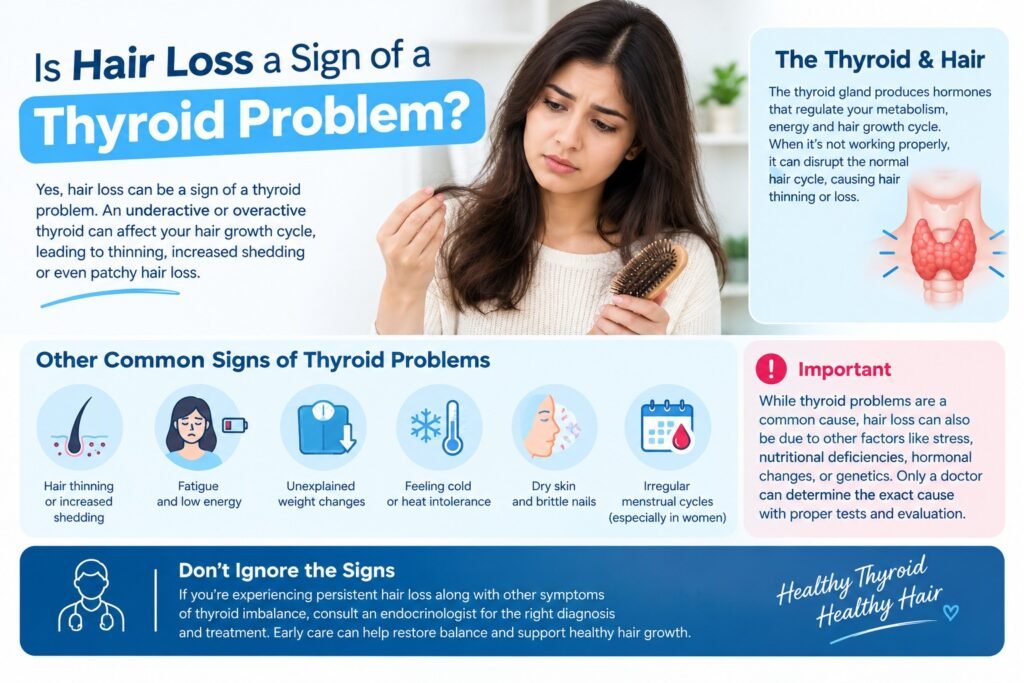
Is Hair Loss a Sign of a Thyroid Problem?
Is Hair Loss a Sign of a Thyroid Problem? Introduction You look at your hairbrush and there is more hair than there used to be. The shower drain looks worse too. It’s upsetting, and many people start worrying about everything from stress to serious illness. Sometimes the cause is your thyroid. If you are searching for thyroid disorders treatment in Ahmedabad, this guide will help you understand the link and what to do next. Take a breath. This is common, and it is very treatable. Is Hair Loss Really Linked to the Thyroid? Yes. The thyroid is a small, butterfly-shaped gland at the front of your neck. It makes hormones that control how fast your body uses energy. Your hair follicles depend on these hormones. When the levels go too high or too low, hair can weaken and fall out more than usual. How Does the Thyroid Affect Your Hair? Every strand of hair goes through a cycle. It grows for a few years, rests, and then sheds so a new one can take its place. Thyroid problems disturb this cycle. More hairs move into the resting and shedding phase at the same time. That is why you suddenly notice so much hair fall. This can happen with: Hypothyroidism: the thyroid is underactive and makes too little hormone Hyperthyroidism: the thyroid is overactive and makes too much What Does Thyroid Hair Loss Look Like? Thyroid-related hair loss has a typical pattern. It is usually: Spread evenly across the scalp, making hair look thinner overall Not in one bald patch Sometimes with dry, coarse, or brittle hair Sometimes with thinning of the outer edge of the eyebrows Losing 50 to 100 hairs a day is normal. If you are losing clearly more than that for several weeks, it is worth getting checked. What Other Symptoms Should I Look For? Hair loss rarely happens alone. Your body usually gives other hints. With an underactive thyroid: Constant tiredness Weight gain Feeling cold when others feel fine Dry skin and constipation Low mood or poor concentration Heavy or irregular periods With an overactive thyroid: Weight loss despite eating well Fast heartbeat Sweating and feeling hot Anxiety, shaky hands Loose stools Trouble sleeping Also look for a swelling at the front of your neck. Thyroid problems are more common in women, especially after pregnancy and around menopause. Could Something Else Be Causing My Hair Fall? Absolutely, and this is important. Hair loss has many causes, including: Low iron levels (very common in women) Low vitamin D or vitamin B12 Crash dieting or sudden weight loss Physical or emotional stress Delivery of a baby PCOS Family history of hair thinning Certain medicines That is why buying hair oils or supplements without knowing the cause often wastes time and money. Find the reason first. How Is a Thyroid Problem Diagnosed? The good news is that testing is quick and simple. Your doctor may suggest: TSH test: the main screening test for thyroid function Free T4 and T3: to see the actual hormone levels Anti-TPO antibodies: to check if your immune system is affecting the thyroid Your doctor may also check iron, vitamin D, and B12, since these often affect hair too. One practical tip: if you take biotin for hair, tell your doctor. It can sometimes interfere with thyroid blood tests and give misleading results. What Does Thyroid Disorders Treatment Involve? Treatment depends on what your tests show. The goal is simply to bring your hormone levels back to normal. Underactive thyroid: a daily thyroid hormone tablet, usually taken on an empty stomach in the morning. Iron and calcium tablets should be taken a few hours apart from it. Overactive thyroid: medicines to slow the thyroid down. In some cases, other options are advised by your doctor. Please do not stop or change your dose on your own, even when you feel better. Thyroid treatment often needs regular follow-up and blood tests to keep the dose right. An experienced endocrinologist can guide you through this step by step. Will My Hair Grow Back? In most people, yes. When thyroid levels settle, the hair cycle slowly returns to normal. But patience is needed. Hair grows slowly, so you may see improvement only after three to six months, sometimes longer. Shedding often reduces first, and new baby hairs appear later. If your hair is not improving, that does not mean treatment has failed. It may mean the dose needs adjusting, or another cause like low iron is also involved. What Can I Do at Home to Help? Small daily habits support your treatment: Eat enough protein, such as dal, paneer, eggs, or sprouts Include iron-rich foods like leafy greens, chana, and jaggery Avoid extreme diets Be gentle with your hair. Avoid tight hairstyles and very hot styling tools Sleep well and find ways to manage stress Take your medicines at the same time every day Final Thoughts Hair loss can shake your confidence, and it is natural to feel worried. But it is also a useful signal. It may be your body’s way of telling you the thyroid needs attention. The right diagnosis makes all the difference, and most thyroid problems are very manageable. If you are looking for thyroid disorders treatment in Ahmedabad, consider consulting Dr. Shruti Khare Aterkar, an endocrinologist who can find the real cause and plan treatment that suits you. Don’t wait for it to get worse. Book a consultation, get the right tests done, and take the first step towards healthier hair and better health.